Old Money Fashion: The Complete Guide to Quiet Luxury
Ever wondered how some people look effortlessly polished without a single visible logo? Welcome to old money fashion, the quiet luxury aesthetic that has taken over Pinterest boards and street style alike. This look is not about chasing trends. It is about timeless pieces, quality fabrics and outfits that would have looked just as good fifty years ago as they do today.
In this guide, you will learn what the old money aesthetic really means, the capsule wardrobe pieces worth investing in, the fabrics and fits that make or break the look, the color palette that keeps everything cohesive, and how to pull it all off on a realistic budget.
What Old Money Style Really Means

Old money fashion draws its name from families with inherited wealth, the kind who attended Ivy League schools, spent summers at country clubs and never felt the need to prove anything with their clothes. The style is built on three quiet principles: quality over quantity, fit over flash, and understatement over obvious branding.
Where fast fashion screams for attention, old money style whispers. Logos are invisible or absent, prints are subtle (think stripes and classic checks), and every outfit looks intentional without looking overplanned.
You will often hear it grouped with quiet luxury and preppy style, and there is plenty of overlap. Quiet luxury is the broader trend of understated elegance, preppy style is its sporty American cousin, and old money fashion is the timeless, heritage-rooted core both draw from.
The Old Money Capsule Wardrobe
The secret to this aesthetic is a small wardrobe of hard-working pieces that all mix and match. Start with these twelve essentials:
| Capsule piece | Why it works | How to wear it |
|---|---|---|
| Tailored wool blazer | Instantly sharpens any outfit | Over a white shirt with trousers or jeans |
| Crisp white button-down | The backbone of the wardrobe | Tucked into skirts, trousers or under sweaters |
| Cashmere or merino crewneck | Soft, refined, never sloppy | Over a collared shirt, collar peeking out |
| Navy or camel wool trousers | Polished without trying | With loafers and a tucked-in knit |
| Pleated midi skirt | Feminine and timeless | With a cardigan and ballet flats |
| Classic trench coat | The ultimate transitional layer | Belted over dresses or denim |
| Leather loafers | Quietly expensive-looking | With trousers or skirts |
| Ballet flats | Effortless daytime elegance | With midi skirts or cropped trousers |
| Silk scarf | Adds polish to the simplest outfit | At the neck, on a bag or in the hair |
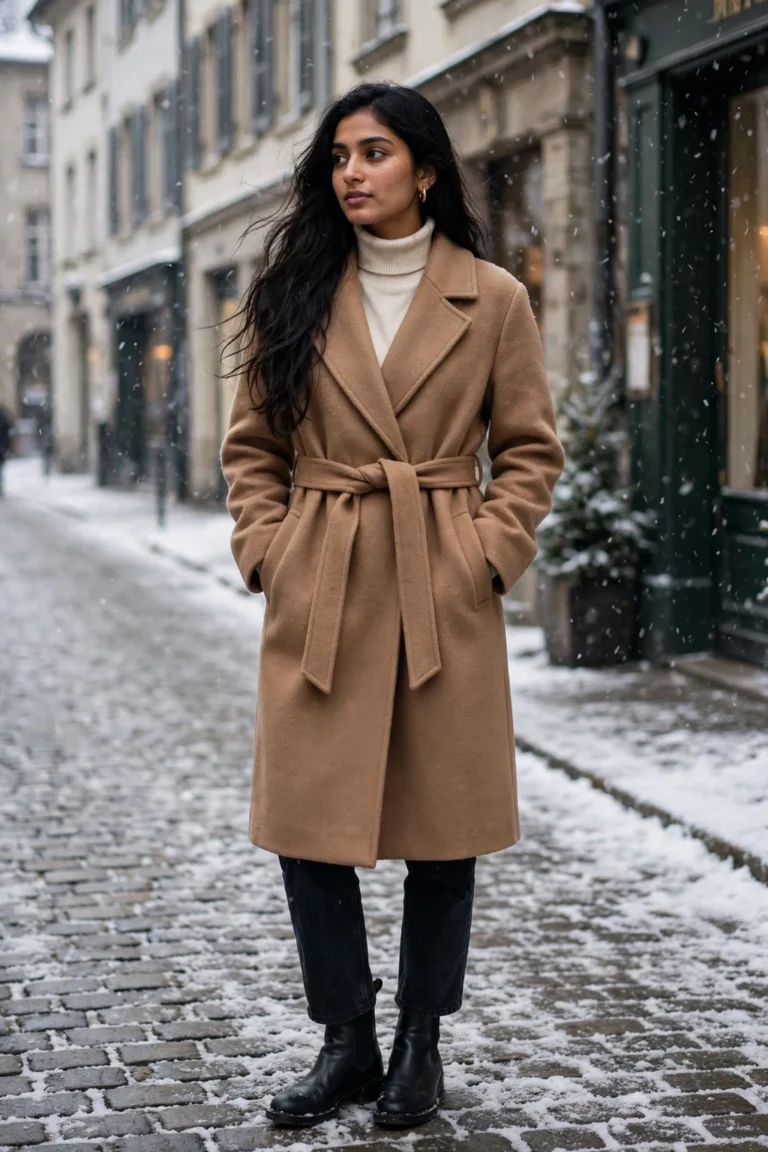
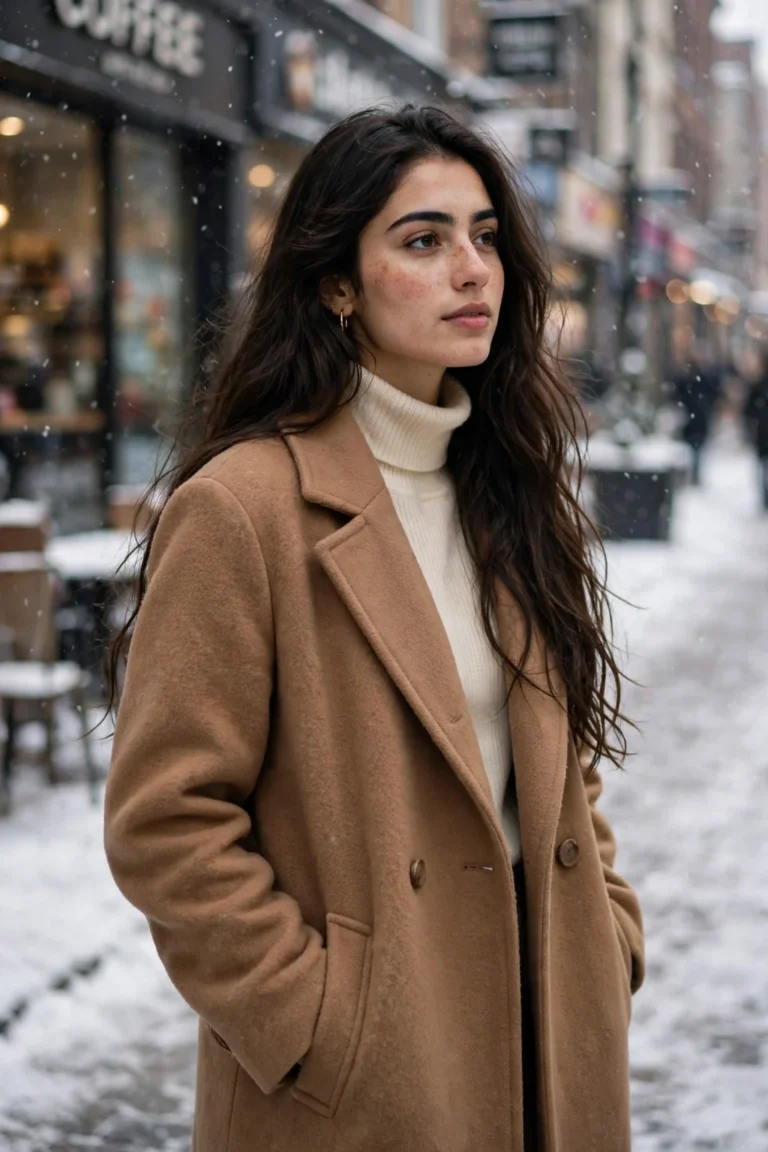
| Wool overcoat | Structure for cold months | In camel, navy or grey |
| Linen shirt and trousers | Breathable summer sophistication | In white, cream or stone |
| Simple leather handbag | Structured, logo-free, lasting | In tan, black or deep brown |

A cable-knit cricket sweater like this one is a perfect example of the aesthetic: sporty heritage, natural fibers and zero branding. If you are building a cold-weather rotation, a winter capsule wardrobe built around pieces like this will carry you through the season.

The navy blazer with white separates is one of the most recognizable old money formulas, working from summer marinas to autumn layering.
Fabrics and Fits Matter More Than Brands
Here is the truth most style guides skip: nobody is checking your labels. What reads as expensive is fabric and fit. A forty-dollar cashmere-blend sweater that fits beautifully will always outshine a designer piece in scratchy polyester.
The fabrics to look for: cashmere and merino wool for knits, silk for blouses and scarves, linen and cotton poplin for warm weather, tweed and flannel wool for autumn structure, and full-grain leather or suede for shoes and bags. Natural fibers age gracefully; synthetics do not.
The fit rules: tailored, not tight. Trousers should break just at the shoe, jacket shoulders should sit exactly on your shoulder line, and sleeves should end at the wrist bone. When in doubt, visit a tailor: a twenty-dollar alteration can make a thrifted blazer look custom-made.

Tweed is the fabric equivalent of a firm handshake: textured, substantial and instantly respectable.
The Old Money Color Palette
The palette is deliberately narrow, which is why everything matches. Build your wardrobe around neutrals like navy, camel, cream, grey and black, then add one or two accents such as olive, burgundy or forest green.
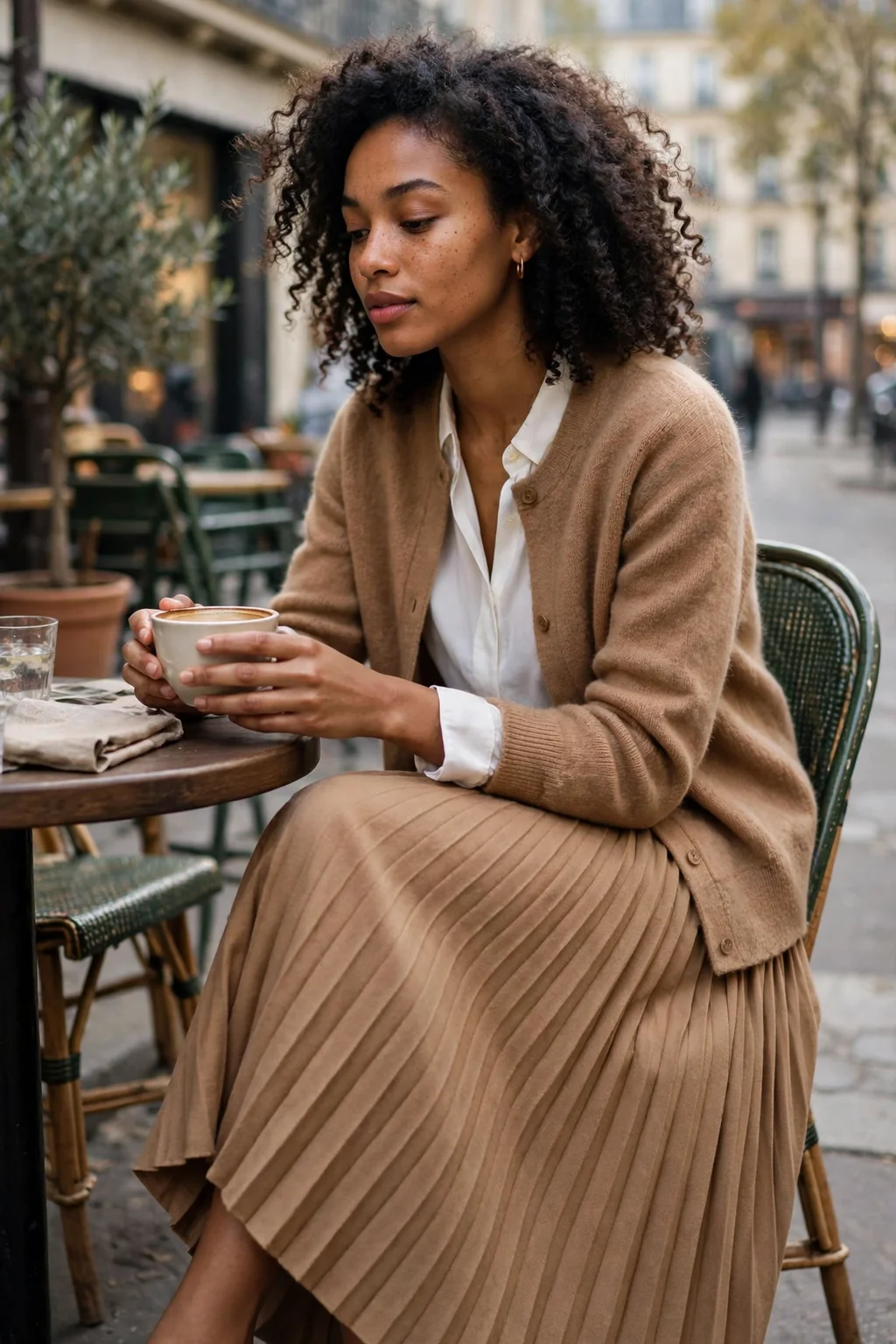
Camel on camel with a crisp white blouse is a masterclass in tonal dressing: when your whole outfit lives in one color family, even simple pieces look considered.
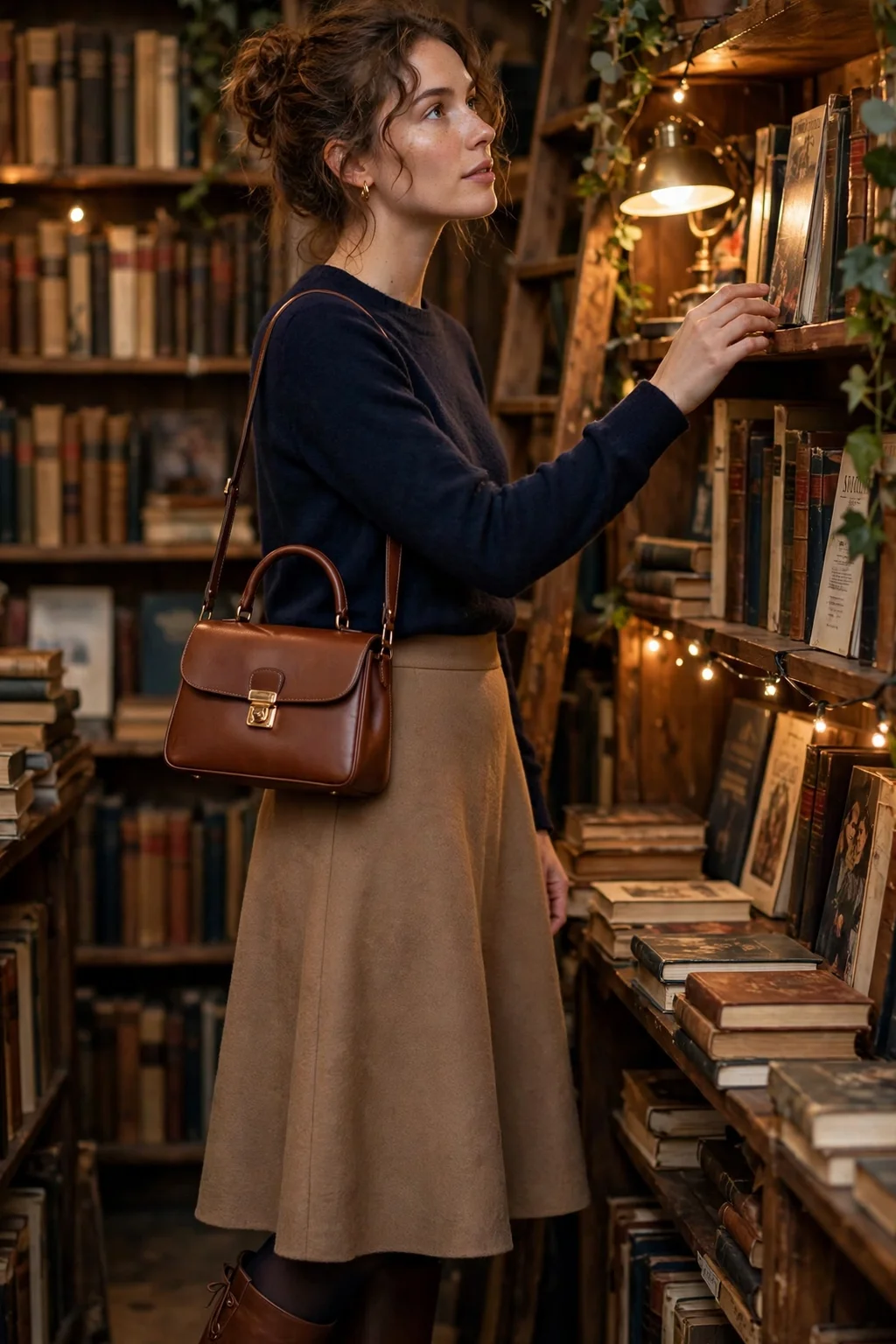
Navy and camel is the signature pairing of the aesthetic. This combination works in every season and flatters nearly every skin tone.
Old Money Do’s and Don’ts
| Do | Don’t |
|---|---|
| Invest in natural fabrics | Buy shiny synthetics that look cheap up close |
| Keep logos invisible or absent | Wear head-to-toe visible branding |
| Choose classic, simple jewelry | Pile on chunky statement pieces |
| Iron or steam everything | Wear wrinkled linen (there is crisp, then there is messy) |
| Dress for the occasion | Overdress or underdress for the setting |
| Keep nails neat and natural | Go for extreme nail art with the look |
| Wear well-maintained shoes | Let scuffed shoes ruin a good outfit |
| Layer thoughtfully | Force trends that clash with the aesthetic |

A silk scarf is the easiest way to add personality without breaking the rules. Tied at the neck over a trench, it turns a simple outfit into quiet confidence.
How to Get the Look on a Budget
You do not need a trust fund to dress like you have one. The whole philosophy is buying less and buying better, which is naturally budget-friendly.
Start with thrift and vintage stores. Blazers, trench coats, wool trousers, silk scarves and leather loafers are easy quality finds secondhand. Check the fabric label before the brand label: wool, cashmere, silk and leather are the wins.
Think in cost per wear. A $120 wool blazer worn 100 times costs $1.20 per wear. A $30 trendy top worn twice costs $15 per wear. The math always favors classics.
Tailor the cheap finds. Hemming trousers or taking in a blazer waist costs little and changes everything.
Shop end-of-season sales and build slowly. Quality retailers discount wool coats in February and linen in August. Start with a white shirt, navy trousers and one good blazer, then add a piece each month. For a full breakdown of affordable outfit formulas, see our guide to old money outfits on a budget.

Summer is the easiest season to do on a budget: crisp linen in neutral tones needs no expensive accessories to look refined.

The sweater draped over the shoulders is the most borrowed styling trick in preppy style. It costs nothing and instantly signals the aesthetic.
Grooming and the Finishing Details
The clothes are only half the story. Old money style is finished with grooming that looks effortless because it is consistent: neat, healthy hair; minimal, polished makeup; one or two refined jewelry pieces like pearls, small gold hoops or a simple watch; short, clean neutral nails; and a subtle fragrance. Details like these cost nothing and register instantly.

The finishing touches, all in one frame: polished loafers, a simple gold watch, a silk scarf, pearls and a structured leather bag. Notice what is missing: logos, loud colors and anything trying too hard.
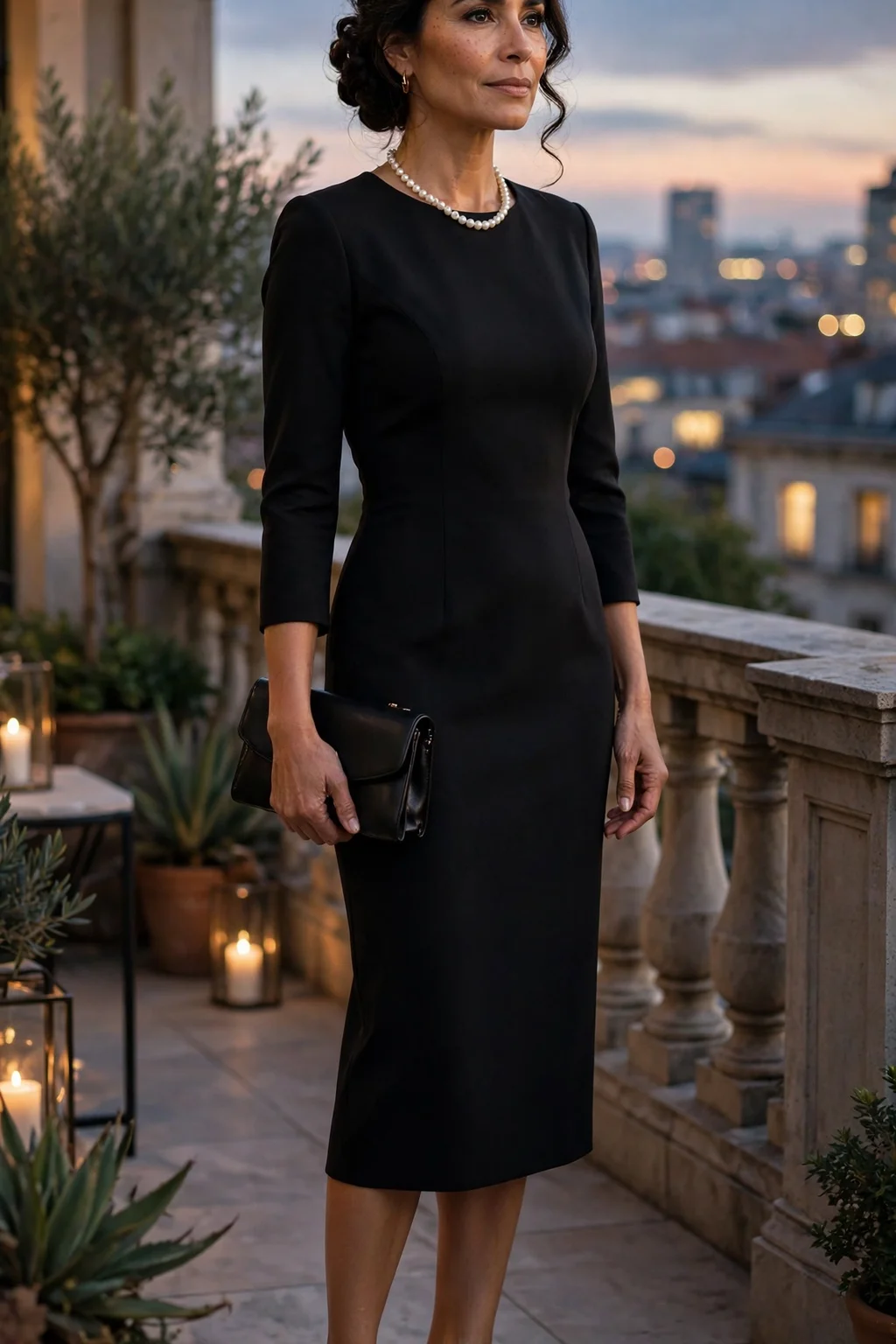
For evening, the formula simplifies further: a well-cut black dress, a single strand of pearls and understated heels.

Winter dressing is where the aesthetic truly shines. A herringbone overcoat, a quality knit scarf and leather gloves turn the coldest months into your best-dressed season.
Old Money Fashion FAQs
What exactly is old money fashion? A timeless style inspired by the understated wardrobes of established wealthy families. It favors quality natural fabrics, classic tailoring, neutral colors and invisible branding: elegant and never trend-chasing.
What is the difference between old money and quiet luxury? Quiet luxury is the broader trend of understated, logo-free elegance, while old money fashion is the heritage-rooted aesthetic behind it, drawing from Ivy League and country club traditions. All old money style is quiet luxury, but not all quiet luxury is old money.
Can I wear old money style on a budget? Absolutely. Thrift stores are full of wool blazers, silk scarves and leather loafers at a fraction of retail price. Focus on natural fabrics, get inexpensive tailoring, and build your capsule wardrobe one piece at a time.
Which colors should I avoid? Neon shades, loud prints and large visible logos clash with the aesthetic. Color is not banned, though: burgundy, olive, forest green and soft pastels all fit beautifully when the fabrics and fits are right.
Is old money fashion still in style in 2026? Yes, and that is the point. While the fashion trends of 2026 will come and go, the old money wardrobe barely changes from decade to decade. That timelessness is exactly why it keeps resurfacing.
Conclusion
Old money fashion is not about wealth. It is about intention: choosing fewer, better pieces, caring about fabric and fit, and letting quiet confidence do the talking. Start with the capsule essentials, stick to the neutral palette, mind the details, and build slowly. Once your wardrobe rests on these foundations, everything matches and everything lasts.



2 Comments